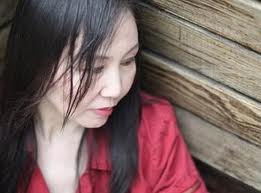
Poetry International Interview with Mindy Zhang

In April Poetry International published their interview with Mindy Zhang 明迪 about translating poetry between English and Chinese. Here’s how the interview begins:

PI: What is the most challenging aspect of translating poetry?

MZ: The hardest part of translation is to go inside the mind of the poet and find out what he did NOT want to say. I like ambiguities and multiple readings but I think we should avoid misleading. If the poet hated rhythm and musicality in poetry, making the translation musical would mean cheating.  These are, of course, extreme cases. Usually I try to figure out what’s in a poem rather than what’s not in a poem. There are always several choices to translate a line, I would focus on which one represents the closest meaning and brings out the implied, the suggested, the hidden meaning and which one best presents the tone and the mood.  Very often I look at the translation, hmmmm, this doesn’t sound right— I make changes; I stare at the original poem, stare at it literally, until I hear the voice of it.  In other words, a translated poem should be as good as it was originally with its linguistic and emotional subtleties. Whatever drives the poem forward, the motif and echoes, the rhythm and variations, the passion or reasoning, the word play, the visual shifting, whatever, should be reflected in the translation.

Her responses include mentions of lots of poets & writers from around the world, as well as translators Jonathan Stalling, Christopher Lupke, Denis Mair, and Nick Admussen.

Eliot Weinberger’s “What Makes a Poet a Tick?”

New Eliot Weinberger essay - What Makes a Poet a Tick?from the New Directions blog:

This year, essayist and literary critic Eliot Weinberger published Wildlife––a collection of his essays on animals––with Australian publisher Giramondo. While many of these pieces are republished from our editions, there are four previously unpublished works that make their debut in Wildlife. One of these, “What Makes a Poet a Tick?” (written in response to the question “What Makes a Poet Tick?” Mr. Weinberger has graciously allowed us to reproduce here.

“What makes a poet [a] tick?” I think someday soon Weinberger and Xi Chuan should co-edit a New Directions anthology of writers on insects.

Asymptote July 2012

The new issue of Asymptote is out, featuring work by Rosmarie Waldrop, plus A Sinophone “20 under 40,” as well as:

“The Pocketwatch,” a new translation of a Huang Chunming story (by Howard Goldblatt)

Translations of Yang Mu’s poetry (by Arthur Sze and Michelle Yeh)

Translations of Ye Mimi’s poetry (by Steve Bradbury)

Dylan Suher essay on Qian Zhongshu, that also serves as a review of Humans, Beasts and Ghosts: The Collected Short Stories of Qian Zhongshu (translated by Christopher G. Rea)

Also see the January 2012 issue for my translations of Xi Chuan‘s “Beast” 巨兽, “The Distance” 远方, and “Poison” 毒药,  and hear a recording of “The Distance” read in Chinese by Huang Yin-Nan.

New Issue of Cerise Press

Cerise Press Vol. 4 Issue 10 CoverThe Spring 2012 issue of Cerise Press has been online since the beginning of the month, with new work by Seth Abramson, Sylvia Legris, and others, and poems by Li Jianchun 李建春 translated by Diana Shi & George O’Connell and Yi Lu 伊路 translated by Fiona Sze-Lorrain.

Also see my feature “Xi Chuan: Poetry of the Anti-lyric” from an earlier issue, with translations of “Power Outage” 停电, “Re-reading Borges’s Poetry” 重读博尔赫斯诗歌, and “Three Chapters on Dusk” 黄昏三章. (And my earlier co-translations of poems by Bei Dao 北岛 with Clayton Eshleman).

Fiona Sze-Lorrain on Jeffrey Yang’s translatoin of Liu Xiaobo’s June Fourth Elegies

Image of Liu Xiaobo’s “June Fourth Elegies” Fiona Sze-Lorrain‘s review of Jeffrey Yang‘s translation of June Fourth Elegies 念念六四 by Liu Xiaobo 刘晓波 is now up on Words Without Borders. Strangely, her review doesn’t mention Yang by name, but she does discuss the translation, calling it “a stylistic rendering of Liu Xiaobo’s plainspoken language, which at times can be physical—gnawing and piercing in its implications.”

Here’s how she begins her review:

Poetry charts a circular path to freedom for Chinese political activist and writer Liu Xiaobo. “I am merely / a discarded wooden plank / powerless to resist the crushing of steel / still, I want to save you no matter if you’re / dead or still barely breathing, breathing,” the poet writes in “Memories of a Wooden Plank,” on the twelfth anniversary of the 1989 Tian’anmen Massacre.  Powerless to narrate history as a public intellectual in his own country, Liu finds in poetry a force of resistance and an unlikely promise of solace.  “I’m still alive / with a name of some disrepute / I possess neither courage nor qualifications,” he confesses in the second elegy, “For 17.”  A year after writing those lines, Liu still believes poetry has a singular power to disarm.  As he concludes in the third elegy, “Suffocating City Square:”

This death-cast girl
has become a line of pure poetry
that surrenders all ideograms

Chad Post on Creative Constraints

Australians in Italy coverAt the 3% blog Chad Post writes his take on some of the issues discussed in Creative Constraints: Translation and Authorship, the collection of academic essays on the topic edited by Rita Wilson and Leah Gerber. Like most translators, I find this topic endlessly fascinating (I may end up writing a book on it at some point), and related to what I wrote in my introduction to Xi Chuan’s Notes on the Mosquito: “I am motivated by a belief that the reader not only wants to know but can know both what Xi Chuan says and how he says it.”

Chad focuses on the issue of translations being edited for style. He writes:

At some level, this isn’t just about eliminating terms that American readers aren’t familiar with, but working from the assumption that readers are stupid and have to have everything explained to them. For example, there’s a lot of offensive stuff in the edits of Mima Simic’s story but the thing that bothers me is the sort of flattening out of the prose to make sure that everyone understands. For example, this:

original:
She can tell the time by the smell of the stuff in the pan.

edit:
She can tell how long something’s been frying by the way it smells.

As far as that goes I agree, and I don’t endorse dumbing-down challenging writing for the sake of an underestimated American audience. Still, I’m less compelled by the following example, from volume contributor Peter Bush:

libradas de sus mazmorras y grillos, las palabras al fin, las traidoras, esquivas palabras, vibren, dancen, copulen, se encueren y cobren cuerpo (Juan Goytisolo original)

released from their chains and dungeons, words, treacherous elusive words, at last quiver dance copulate strip off and flesh out (Peter Bush)

released from their chains, their dungeons, those words, those treacherous elusive words, quiver at last and dance and copulate, removing their rags and clothing themselves in flesh (edited version)

I don’t know Spanish, but I’m not convinced that either Bush’s version or the edit is better at reproducing and representing Goytisolo’s style: to me, the repeated commas in the Spanish convey something neither version quite captures in English. That said, I don’t see anything so wrong with Bush’s first version that the edit definitely fixes.

Chad’s piece–one of the longer 3% blog posts I’ve read in a while–is well worth reading, and I look forward to seeing Creative Constraints. I should mention, though, that I was very happy with my editing process with New Directions: they made very helpful suggestions, and I had the freedom to accept or make counter-edits as I saw fit.

Hong Kong Book Fair Events

The Hong Kong Book Fair begins tomorrow. You can find the complete list of events here in English and Chinese, but Bruce Humes has narrowed down the topics of interest, which I re-post here:

July 18

尋找華人推理小說的線索

Speaker: 紀蔚然 (Taiwanese writer on suspense novels)

人性‧文化‧制度

Speaker: 資中筠  (Zi Zhongyun, Chinese scholar and translator)

武俠小說與武俠電影 — 雷鋒還是雷人?

Speaker: 温瑞安 (Malaysian-born wuxia author Wen Jui on martial arts novels and cinema)


July 19

什麼是文學的經驗?

Speaker: 格非 (Novelist Ge Fei: What is ‘literary experience’? )

父親與民國

Speaker: 白先勇 (Pai Hsien-yung: My Father and the Republic of China)


July 20

烽火大地、永恆之旅

Speaker: 張翠容 (Cheung Chui-yung, HK travel writer)

內地與香港的文化衝突與融和   

Speaker: 馬立誠 (Ma Licheng: HK and the Mainland—Cultural Conflict and Synthesis)


July 21  

Talks on and Multilingual Reading of Leung Ping-kwan’s Poetry

Recitations by西野由希子, Sonia Au(待定), and 也斯, and talk by the always-controversial Professor Wolfgang Kubin

鄉音已改──小說家的世界觀 

Speaker: 黎紫書  (Lin Baolin, female writer born in Malaysia, on the distance between authors and their homelands)

女作家的香港煙霞

Speaker: 張曼娟 (Taiwanese novelist Chang Man Chuan)

為什麼總要問創作人靈感從哪來?

Speaker: 彭浩翔  (HK author and director: Why question the source of an artist’s inspiration?)


July 22

如今的文學與寫作

Speaker: 馮唐 (Feng Tang, Beijing novelist published in French and in Hong Kong (不二), on contemporary literature and writing)

生活與閱讀 

Speaker: 黃春明 (Huang Chunming, Taiwanese short story writer, and author of The Taste of Apples that lampooned the fascination of the island’s modern youth with their former occupiers, the Japanese)

愛是修養自己的旅程

Speaker: 素黑 (Hong Kong female author and columnist)


July 23

廢物•人渣•垃圾:城市書寫的邊緣視野

Speaker: 馬家輝 (Hong Kong journalist Ma Ka-fai on scum, rubbish and urban writing)

如秋水長天 

Speaker: 慕容雪村  (Murong Xuecun, controversial Chinese novelist, and author of Absurdities of China’s Censorship System

報導綠色

Speaker: 陳曉蕾 (Chen Xiaolei on “green” reportage)

我們這個時代的怕和愛:談中國電視劇

Speaker: 毛尖 (Mao Jian: Chinese TV Dramas—Fear and Love in our Era)

Sky Lanterns: Poetry from China, Formosa, and Beyond

Sky Lanterns: Poetry from China, Formosa, and BeyondThe new issue of Mānoa is available, edited by Frank Stewart with Fiona Sze-Lorrain:

Sky Lanterns brings together innovative work by authors—primarily poets—in mainland China, Taiwan, the United States, and beyond who are engaged in truth-seeking, resistance, and renewal. Appearing in new translations, many of the works are published alongside the original Chinese text. A number of the poets are women, whose work is relatively unknown to English-language readers. Contributors include Amang, Bai Hua, Bei Dao, Chen Yuhong, Duo Yu, Hai Zi, Lan Lan, Karen An-hwei Lee, Li Shangyin, Ling Yu, Pang Pei, Sun Lei, Arthur Sze, Fiona Sze-Lorrain, Wei An, Woeser, Yang Lian, Yang Zi, Yi Lu, Barbara Yien, Yinni, Yu Xiang, and Zhang Zao.
Sky Lanterns also features images from the Simple Song series by photographer Luo Dan. Traveling with a portable darkroom in remote, mountainous regions of southern China’s Yunnan Province, Luo Dan uses the laborious nineteenth-century, wet plate collodion process of exposure and development. In exquisite detail, he captures a rural life that has remained intact for centuries.

Click the image for ordering information.

Chinese Literature & 11 other sections coming to Dissertation Reviews

The announcement was made months ago, but I’ll be getting in touch with dissertation writers & reviewers soon.

We are proud to announce that, starting in the 2012-13 academic year, Dissertation Reviews will undergo a major expansion to include 12 new and enlarged fields (for a total of 15 fields in all). If you would like to have your dissertation reviewed, or help us by serving as a reviewer, please contact dissertationreviews@gmail.com.

Our new fields, and their respective Field Editors, include:

Bioethics (Tamara Kayali)
Chinese Literature (Lucas Klein)
Inner Asian Studies (Loretta Kim)
*Korean Studies (John DiMoia)
Medical Anthropology (Orkideh Behrouzan)
Premodern Japanese Literature (William Fleming)
Russian Studies (Elizabeth McGuire and Philippa Hetherington)
South Asian Studies (Rebecca Grapevine)
Southeast Asian Studies (Chiara Formichi)
Tibetan and Himalayan Studies (Nicole Willock and Nancy G. Lin)
Visual Studies (Rikke Schmidt Kjaergaard)
[* Korean Studies is both a continuation and expansion of the field pioneered this past year by Nancy Abelmann and Laura Nelson]

In addition, our current constellation of fields will continue to operate, featuring reviews of work in:

Chinese History (Thomas S. Mullaney)
Japan Studies (Dennis Frost)
Science Studies (Leon Rocha)

Click here for the announcement page, featuring bios of the field editors.