Mair on Zero Distance Anthology

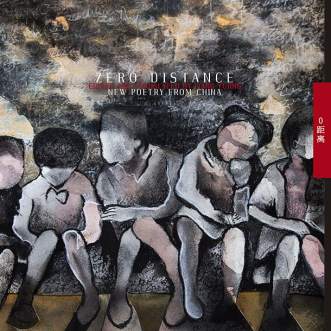
Translator Denis Mair reviews Liang Yujing’s Zero Distance: New Poetry from China (Tinfish) for the International Examiner:

In the late 90s and early years of the new millennium, a polemical battle between “intellectual writing” and “populist writing” unfolded on Chinese websites … The populist camp was interested in developing China’s own native modernism; the intellectual writing camp seemed committed to working through Western modernist currents that had been interrupted during China’s period of leftist isolationism … we can hear reverberations of that clash in this concise anthology ably edited and translated by Liang Yujing. This svelte volume indeed gives English readers “a glimpse of what is being written in China now.” However, a random sampling would be confusing in a country where “good poetry can be found anytime anywhere…and good unknown poets can be seen at every corner of the land.”

This collection hangs together because the translator mines an authentic vein of native modernism. It also earns the title Zero Distance by affording glimpses into the life-experience of inquiring young minds since the new millennium.

Read the full review by clicking on the image above.

Peninsula Daily News Feature on Red Pine

Port Townsend’s Bill Porter, who translates Chinese poetry under the name Red Pine, is the 2018 recipient of the Thornton Wilder Prize for Translation by the American Academy of Arts and Letters. He heads to New York to pick up his prize next month. (Jeannie McMacken/Peninsula Daily News)When it was announced last month that Red Pine (Bill Porter) had won the American Academy of Arts & Letters Thornton Wilder Prize for translation, his local Peninsula Daily News went out to report.

The article covers his background:

He wanted to study anthropology with Margaret Mead at Columbia and applied for financial aid.

“I noticed there was a language fellowship funded by the defense department for those who wanted to study a rare language. I had just read a book by Alan Watts called ‘The Way of Zen.’ It made wonderful sense to me and it had some Chinese characters in it. So I wrote in Chinese on a whim. They gave me a four-year fellowship to study anthropology and Chinese. Chinese was hard.

“I met a monk in Chinatown and he taught me how to meditate and I started spending weekends with him at this retreat place. I realized this is what I wanted to to. It was much more interesting than studying.

“So I quit Columbia and went to Taiwan. A fellow grad student had the address of a Buddhist monastery. I studied Chinese so I went there. I stayed at two different monasteries and studied philosophy at a Chinese university.”

And also gets into his more recent international popularity:

“In China, there is a popular program on TV, like our Sex and the City. It’s the most watched program for people aged 20-40. Last May, the male lead told his girlfriend that she had to start learning more about Chinese culture and she should start with Bill Porter’s books. Fifteen hundred million people watch this program. Boom. I’ve been getting royalties from China ever since.”

With the Wilder award, he plans to buy a new car.

Fittingly, it is an Escape.

Click the image above for the full article.

October Dedications by Mang Ke

Announcing October Dedications, the selected poems of Mang Ke 芒克, edited and translated by Lucas Klein, with further translations by Huang Yibing and Jonathan Stalling—part of the Jintian series jointly published by Zephyr and The Chinese University Press.

Mang Ke (b. 1950, penname of Jiang Shiwei 姜世伟) began writing poetry as a sent-down youth in Baiyangdian, rural Hebei province, during the Cultural Revolution. As co-founder of the PRC’s first unofficial literary journal Jintian (Today) in 1978, he is one of the progenitors of what would later be called Obscure or “Misty” Poetry, with spare, impressionistic poems that were among the first to break free of the imposed discourse of Maoism towards an image-based literary style that left space for both expression and interpretation. He currently makes his living as an abstract painter and lives in Songzhuang, an artists’ colony on the outskirts of Beijing.

“Mang Ke’s poems are radical in their immediacy, exploring the vexed space between public world and private experience, honing in on the gap between with sometimes uncanny directness … I don’t think I have ever read anything quite like it.”
—Rae Armantrout

“Mang Ke is a genius amongst contemporary Chinese poets. In a dark age, his early lyric poems were unparalleled–translucent, profound, and enchanting.”
—Bei Dao

For further information, including how to order, see the pages at Chinese University Press or Zephyr.

Klein’s Duo Duo in Asian Cha

No automatic alt text available.

The new issue of Cha: An Asian Literary Journal is now live, and with it my translations of two new poems by Duo Duo 多多, “A Fine Breeze Comes” 好风来 and “Light Coming from Before, Sing: Leave” 从前来的光,唱:离去.

tomorrow’s already past
already offered
the past is still unknown
already spokenthe limit belongs to you
nobody can have that name

明天已经过去
已经给予
过去仍是未知的
已经说出 止境属于你
无人能有那名

Also in the issue are Bonnie McDougall’s translations of poems by Ng Mei-kwan 吳美筠, Jennifer Feeley’s translation of fiction by Xi Xi 西西, fiction by Eileen Chang 張愛玲 translated by Jane Weizhen Pan & Martin Merz, and Matt Turner reviewing Paul French and Kaitlin Solimine and Eleanor Goodman reviewing Richard Berengarten.
Click the image above to get to the issue.

Admussen’s Recite and Refuse on New Books in East Asian Studies

Image result for nick admussen recite refuseMiranda Corcoran interviews Nick Admussen about his monograph Recite and Refuse: Contemporary Chinese Prose Poetry–about Lu Xun 鲁迅, Bing Xin 冰心, Ke Lan 柯蓝, Guo Feng 郭风, Liu Zaifu 刘再复, Ouyang Jianghe 欧阳江河, Xi Chuan, and more–for New Books in East Asian Studies.

From the intro:

Published by the University of Hawaii Press in 2016, Nick Admussen’s exciting new book Recite and Refuse: Contemporary Chinese Prose Poetry explores the development of twentieth-century prose poetry within the unique political and cultural context of Communist China. In this ambitious study, Admussen attempts not only to define prose poetry but also to trace its ever-shifting role in modern Chinese society. In doing so, he produces a study which comprehensively analyses the dynamic manner in which Chinese prose poetry engages with a range of diverse cultural discourses, including science, popular culture and political rhetoric. Throughout the book, Admussen foregrounds the protean nature of the genre by exploring how prose poetry has been used by poets working both within and outside of official Communist Party strictures. Moreover, he identifies Chinese prose poetry as a unique tradition, distinct from Euro-American manifestations of the genre. In addition to these insightful analyses, Recite and Refuse also contains a number of original translations of important Chinese prose poems, including Ouyang Jianghe’s stunning “Hanging Coffin”.

Click the image above or listen here.

Audio clip: Adobe Flash Player (version 9 or above) is required to play this audio clip. Download the latest version here. You also need to have JavaScript enabled in your browser.

Madrid on Chinese “Rhyme Spoilage”

Anthony Madrid (writing for the Paris Review) doesn’t like half-rhymes, slant-rhymes, or eye-rhymes:

Everybody who cares anything for old poetry in English knows how it feels—knows how awful it feels—when a poem is rhyming away and then suddenly the rhyme goes off the rails for a second because English pronunciation has changed since the time the poem was written.

But,

What does all this have to do with Chinese? Well, if you don’t already know, you could easily guess that the Chinese language—with all its dialects, creoles, sister languages, and God knows what all—has changed a great deal in the last, oh, three thousand years.

He then launches into a discussion on what he calls “rhyme spoilage.” But what he finds interesting is that

I can also see how different from modern Mandarin the various words were in 1000 B.C.E.  … Yet—and this is the crazy part—they still rhyme in their new forms. This can only be because all the vowels and the consonants shifted together and consistently, like with the Great Vowel Shift in the Indo-European languages. Or that other thing where all the p’s in Latin show up as f’s in English (pater/father, et cetera).

Nevertheless,

Would it be right to say that a lot of old Chinese poetry has pretty much gone from being perfectly rhymed Robert Frost poems to being weirdly rhymed Emily Dickinson poems?

He wants your answers:

Right now there are people reading these very words who know—who truly know—the answers to these questions. So I’m going to go ahead and announce a very exciting conference that is to be held in my gmail inbox. We are looking for papers that would speak to the two questions, above.

Click the image above to read his full post with Madrid’s email to write him with your own expertise and opinions.

Red Pine wins Thornton Wilder Prize for Translation

The American Academy of Arts and Letters has announced the list of writers who’ll receive its 2018 awards in literature–including this detail:

Thornton Wilder Prize for Translation

BILL PORTER (RED PINE)

$20,000 to a practitioner, scholar, or patron who has made a significant contribution to the art of literary translation.

Click on the link above for the full list.

Cha Reading Series: Nine Dragon Island–Eleanor Goodman & Lucas Klein

Goodman and Klein.jpg

Nine Dragon Island: Eleanor Goodman and Lucas Klein 
Date: Wednesday 28 March 2018
Time: 7:30 – 8:45 p.m.
Venue: Kubrick Bookshop & Café
(
Shop H2, Cinema Block, Prosperous Garden, 3 Public square street, Yau Ma Tei, Kowloon 3號駿發花園 H2地舖)

FREE ADMISSION | ALL ARE WELCOME

In this Cha Reading Series event, contributors Eleanor Goodman and Lucas Klein will discuss poetry, translation, and the writing of China—alongside readings from their recent and forthcoming books, including Goodman’s Nine Dragon Island (Enclave/Zephyr, 2016) and Iron Moon: Chinese Worker Poetry (White Pine, 2017), and Klein’s October Dedications: The Selected Poetry of Mang Ke (Zephyr, 2018) and translations of Li Shangyin (NYRB, 2018). Moderated by Cha co-editor Tammy Ho Lai-Ming.

Click the image above for the Facebook registration page.

Complete Review on Weinberger’s 19 Ways of Looking at Wang Wei

I missed this when it was published.

M.A. Orthofer at the Complete Review has reviewed the re-release of Eliot Weinberger’s 19 Ways of Looking at Wang Wei. Here’s an excerpt:

These more than two-dozen variations on the text — and Weinberger’s brief observations of what they get particularly wrong (and also what they seem to get right) — also serve, in sum, as an excellent gloss on the poem. Of course, part of the exercise is to demonstrate the obvious, that there can be no ‘perfect’ 1:1 mapping of the poem — a useful lesson for those who all too readily rely on single translations of their favorite foreign poems and poets … — but beyond that the different perspectives — which is how the translation-attempts can also be seen –, from the most literal attempts to Kenneth Rexroth’s (“perhaps more ‘imitation’ than translation”), also reveal a great deal more about the original to those for whom the Chinese itself remains inaccessible.
Helpfully, Weinberger does not shy away from judging (harshly, where need be) — while giving his reasons for what went right (or oh so wrong) — a reminder, too, of how the often unknowing reader is at the mercy of what is available at the local bookstore or library, or what happens to fall into their hands.

And

The addition of ‘more ways’ to the original collection is also of interest, as it is not just more of the same: as Weinberger notes: “most or all of the English-language translators were aware of the book”, and presumably were influenced in their own takes at least in part by that, writing (or rather translating) in response to Weinberger as well.

Follow the link for the review in full.