The Translator and the Translated: A conversation on Hong Kong‘s literature

Asymptote journal makes its debut at the Hong Kong International Literary Festival with acclaimed local journal Fleurs des Lettres (字花), with an evening of bilingual readings and discussions. Local writers Hon Lai Chu 韓麗珠, Dorothy Tse 謝曉虹, and Liu Waitong 廖偉棠 will read excerpts of their work in Cantonese with accompanying English translations. Translators and Asymptote contributors Lucas Klein, Christopher Mattison, and Doug Robinson, will join them for a conversation on the possibilities and challenges of translation, especially of Hong Kong Literature. A reception and an opportunity to engage with the participants will follow the event. The event is generously supported by Yuan Yang, HKU’s journal of international and Hong Kong literature.
Date: 5 Nov 2014
Time: 6 – 8 pm
Venue: HKU Convocation Room, Main Building 429, The University of Hong Kong
Admission is free and open to the public
Please reserve FREE tickets here.

Chinese Poetry in Asian Cha

2014-10-11_1635The new issue of Asian Cha is here, along with Iris Fan’s poem “In Memory of Leung Ping-Kwan [梁秉鈞]”

no southern terra other than this one
where once a painter dreamed of water
rising from an ancient river flooding his farm

And Hongkong poet Wong Leung Wo’s 王良和 “An Ode to the Tree Roots: Part III” 樹根三頌之三 as translated by Jessica Siu-yin Yeung:

In the first place, the desire to bloom hid in the seed
Becoming the source of strength for itself to struggle and to grow taller, to consider endlessly
Bursting into a luminous point of fixation

開花的欲望早藏在種子裡
成為自身搶高的力源,不斷盤算
爆向一個燦爛的定點

The issue also includes Yeung’s translation of a suite of poems by Wang Zang 王藏, apprehended for organizing a poetry event in support of the umbrella uprising.

Seriously,
From this day on, be a happy person.
Defend your rights happily, talk and act happily
Even though you live forever in the land of sorrow.

真的
从今天起,做一个快乐的人
快乐维权,快乐言行
即便长久活在悲伤的土地

For these poems and many others, click on the image above.

Insistent Voices Modern Chinese Poetry at Asia Literary Review

The new Asia Literary Review is hosting a feature on modern (I think they mean contemporary) Chinese poetry. Here’s an excerpt from the introduction by Zheng Danyi 鄭單衣 (translated with Martin Alexander and Shirley Lee):

For us, poetry wasn’t just a social tool or a political weapon. We worked to create an independent literary movement, inspired by T. S. Eliot and other Modernists, and to form a new sense of beauty from Chinese and Western traditions. We wrote in the music of our own southern languages – and edited with an ear for Mandarin. A vernacular approach was therefore also important – what Coleridge called “the language of ordinary men”. This had been a feature of China’s New Culture Movement, which flourished from 1917 to 1919. It aimed, as we did, to build on the literary traditions of the past and to speak directly to a broad audience in its own language.

The feature includes new translations of old poems by Zheng along with Bei Dao 北島, Duo Duo 多多, Shu Ting 舒婷, Yang Lian 楊煉, Gu Cheng 顧城, Zhai Yongming 翟永明, Bai Hua 柏樺, Zhang Zao 張棗, and Chen Dongdong 陳東東.

Click the image above for the full feature.

Umbrella Supporting Poetry Readers Detained in Beijing

Police in Beijing detained at least seven people over a poem reading meeting last week in support of pro-democracy demonstrations in Hong Kong … The seven participated or intended to participate in an October 2 poem recital at the Songzhuang artists’ community in the capital in support of the Occupy movement in Hong Kong.

Click the image above for the whole article.

Poems from the Borderlands at CLT

Archery and DancingThe new issue of Chinese Literature Today contains a feature, curated by Mark Bender, of poems by ethnic minority poets from southwest China and Inner Mongolia. The featured poets include Aku Wuwu (Apkup Vytvy) 阿库乌雾, Altai 阿尔泰, Asu Yue’er 阿苏越尔, Baoyinhexige 宝音贺希格, Burao Yilu 布饶依露, Mushasijia Eni 俄尼·牧莎斯加, Lu Juan 鲁娟, Ma Deqing 马德清, Mo Du 莫独, Qiangrenliu 羌人六, Sha Ma 沙马, and Yangzi 羊子. Here’s an excerpt from the intro:

As a multi-ethnic state, China is comprised of fifty-six officially recognized ethnic groups. The Han ethnic group (Hanzu) is the majority group, comprising over 91 percent of the population. The fifty-five ethnic minority groups (shaoshu minzu) live mostly in China’s vast borderlands, an arc stretching from northeast to southwest, traversing ecosystems that range from birch and evergreen forest to steppe, to broken uplands, to jungle. In recent decades individuals and communities from many of these ethnic groups have increasingly interfaced with modern urban culture via political programs and economic development. As China has opened and globalized, traditional cultures across the land have been impacted and dynamically transformed. Resource extraction, floating populations of young workers, new technologies, and localized phenomena like ethnic tourism and “intangible cultural heritage” projects are all part of the complex nature of ethnic minority communities today. Since the 1980s the vibrant voices of literally thousands of ethnic minority writers and poets have been heard from all over the country. Among the most exciting voices are those of poets who, in this era of great change, often express uncertainty and ambivalence over the rapidity and nature of the change taking place before their very eyes.

For the full feature, click on the image above.

Occupied

2014-09-29 15.44.38I went for a walk the other day and wrote about it. Robert Archambeau posted it on his (aptly named) Samizdat blog. Here’s the passage that’s gathered the most attention:

One thing she said to me, though, I almost wish she hadn’t: “Stay safe.” It’s something I’ve heard or read from any number of friends in Hongkong and around the world, and of course it’s generally good practice as well as something of a filler when you don’t know what else to say. It’s also a reminder that we’re dealing with a police force that has used brutality already, and that behind that police force is a national government that has called the military and their loaded and aimed weapons onto peaceful demonstrators in the not too distant past. And yet. “Stay safe” verges on blaming the victim: it puts the responsibility on us as politically active individuals acting collectively in solidarity to temper our demands and actions so that they don’t provoke violent retaliation. That, I think, is wrong. It’s the job of the police and the state that employs them to keep us safe, and when they fail at their job, we need to stop their vehicles and halt the economy that offers them legitimacy. And when that happens, well, I’ve rarely felt safer than I did today

Click on the image above for my full post.

SCMP Reviews Something Crosses My Mind

Amy Russell at the South China Morning Post has reviewed Something Crosses My Mind 有什么在我心里一过, Eleanor Goodman’s translation of poems by Wang Xiaoni 王小妮. Here’s an excerpt:

The interaction between Wang’s characters and their environment is a crucial aspect of her work, vividly epitomised in Plowman, where “red … comes after punishment” and “after pain has been quietly survived”.

Wang’s gentle but weighty words are built from sharp observation, and deliver an honesty and rawness brilliantly captured in the translation by Harvard research associate Eleanor Goodman. As a northerner writing in the south, Wang has an outsider’s perspective, noticing details that locals might overlook.

Click on the image for the full review.

Notes on the Mosquito at M-Dash Untranslatables

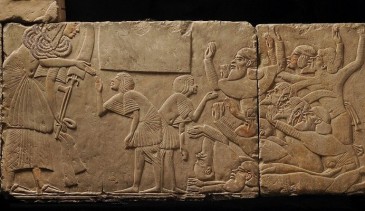
Egyptian Translator 700x428 copyM-Dash, the new literary journal from Autumn Hill Books, is running a series called “The Untranslatables” — “about those words or phrases that give us pause as translators, that stump us and then, sometimes, enlighten us.”

To inaugurate their feature, they invited me to contribute something from my translation of Xi Chuan’s Notes on the Mosquito. I wrote about my translation of the line there is a crowd of commoners as purple as red cabbage 有一群百姓像白菜一样翠绿. Here’s a teaser:

The line deals with the essences of Chinese, but with a twist. While many scholars have codified the Chinese aesthetic as metonymic and literal, the poetry of Xi Chuan’s line operates by revealing the fiction in the Chinese language’s conceptualization: white cabbage is not white (that it is modified by the quintessentially Chinese “jade green” twists the twist with even more torque) … In this instance, though, I sacrificed the insinuation about Chinese in particular to imply that all languages may contain such falsehoods and misnomers: as purple as red cabbage, because, of course, red cabbage is not red. And to reproduce the poïesis of Xi Chuan’s alliteration, such as with the chiasmus of /b/ and /x/ (IPA [ɕ]) and the repeated /c/ (IPA [tsʰ]) in yǒu yìqún bǎixìng xiàng báicài yíyàng cuìlǜ, I preceded it with, there is a crowd of commoners.

Click the image above to link to the full piece.

Aku Wuwu at OSU

https://i0.wp.com/u.osu.edu/mclc/files/2014/09/bender-book2-1ywqcky.jpeg?resize=188%2C289Aku Wuwu 阿库乌雾, well-known Nuosu 诺苏语 poet of the Yi 彝 ethnic group, will be speaking at the Ohio State University on September 24 (7:00-9:00 p.m., Hagerty Hall 388, Columbus, OH), to promote Tiger Traces, edited with Mark Bender.

Unique among Yi poets, he writes in both Chinese and Nuosu. He will respond to various questions about his experience growing up in southern Sichuan, the craft of writing and performing poetry, the significance of mother tongue literature and local knowledge, and the contemporary ethnic poetry gatherings held Chengdu tea houses and other venues.

The talk will be conducted primarily in Chinese, though English translation will be available. For more information, click the image above.