Occupied

2014-09-29 15.44.38I went for a walk the other day and wrote about it. Robert Archambeau posted it on his (aptly named) Samizdat blog. Here’s the passage that’s gathered the most attention:

One thing she said to me, though, I almost wish she hadn’t: “Stay safe.” It’s something I’ve heard or read from any number of friends in Hongkong and around the world, and of course it’s generally good practice as well as something of a filler when you don’t know what else to say. It’s also a reminder that we’re dealing with a police force that has used brutality already, and that behind that police force is a national government that has called the military and their loaded and aimed weapons onto peaceful demonstrators in the not too distant past. And yet. “Stay safe” verges on blaming the victim: it puts the responsibility on us as politically active individuals acting collectively in solidarity to temper our demands and actions so that they don’t provoke violent retaliation. That, I think, is wrong. It’s the job of the police and the state that employs them to keep us safe, and when they fail at their job, we need to stop their vehicles and halt the economy that offers them legitimacy. And when that happens, well, I’ve rarely felt safer than I did today

Click on the image above for my full post.
Notes on the Mosquito at M-Dash Untranslatables

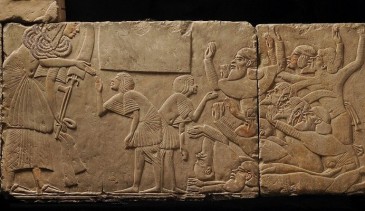
Egyptian Translator 700x428 copyM-Dash, the new literary journal from Autumn Hill Books, is running a series called “The Untranslatables” — “about those words or phrases that give us pause as translators, that stump us and then, sometimes, enlighten us.”

To inaugurate their feature, they invited me to contribute something from my translation of Xi Chuan’s Notes on the Mosquito. I wrote about my translation of the line there is a crowd of commoners as purple as red cabbage 有一群百姓像白菜一样翠绿. Here’s a teaser:

The line deals with the essences of Chinese, but with a twist. While many scholars have codified the Chinese aesthetic as metonymic and literal, the poetry of Xi Chuan’s line operates by revealing the fiction in the Chinese language’s conceptualization: white cabbage is not white (that it is modified by the quintessentially Chinese “jade green” twists the twist with even more torque) … In this instance, though, I sacrificed the insinuation about Chinese in particular to imply that all languages may contain such falsehoods and misnomers: as purple as red cabbage, because, of course, red cabbage is not red. And to reproduce the poïesis of Xi Chuan’s alliteration, such as with the chiasmus of /b/ and /x/ (IPA [ɕ]) and the repeated /c/ (IPA [tsʰ]) in yǒu yìqún bǎixìng xiàng báicài yíyàng cuìlǜ, I preceded it with, there is a crowd of commoners.

Click the image above to link to the full piece.

Aku Wuwu at OSU

https://i0.wp.com/u.osu.edu/mclc/files/2014/09/bender-book2-1ywqcky.jpeg?resize=188%2C289Aku Wuwu 阿库乌雾, well-known Nuosu 诺苏语 poet of the Yi 彝 ethnic group, will be speaking at the Ohio State University on September 24 (7:00-9:00 p.m., Hagerty Hall 388, Columbus, OH), to promote Tiger Traces, edited with Mark Bender.

Unique among Yi poets, he writes in both Chinese and Nuosu. He will respond to various questions about his experience growing up in southern Sichuan, the craft of writing and performing poetry, the significance of mother tongue literature and local knowledge, and the contemporary ethnic poetry gatherings held Chengdu tea houses and other venues.

The talk will be conducted primarily in Chinese, though English translation will be available. For more information, click the image above.

Omniglot Seminar: Cosmologies of the Classical with Chloe Garcia Roberts & David Hinton

headshotDavid Hinton, author of Mountain Home and translator of Chinese poets including Wang Wei 王維, Hsieh Ling-Yün 謝靈運, and Bei Dao 北島, joins Chloe Garcia Roberts, translator of Derangements of My Contemporariesheadshot by Li Shangyin 李商隱. They will discuss their individual approaches to classical poetries and cosmologies, while exploring the influence of classical Chinese poetry on American modernism.

When: Wednesday, September 24, 6:00 p.m.
Where: Woodberry Poetry Room, Lamont Library, Room 330.
Harvard University, Cambridge MA

Li Shangyin translations at Drunken Boat

Drunken Boat has published three poems by Li Shangyin 李商隱 in my translation.

I’ll come is   empty talk   I’ll go and then no trace
The moon slants   over the tower   the fifth clack of the bell

Li Shangyin 李商隱The page also includes a note where I explain how my translations “aim to link the opposition to the social order that motivated these poems in the ninth century with an opposition to the social orders relevant to dense and allusive poetry today.”

Thanks to Managing Editor Erica Mena, Translation Editor Anna Rosenwong, and founding editor Ravi Shankar for including my work!

Video of Ouyang Jianghe reading from Phoenix

The write-up from Paul Manfredi’s China Avantgarde blog:

Ouyang Jianghe’s 欧阳江河 poem was inspired by a sculptural work of the same title by Xu Bing 徐冰. Xu Bing’s sculpture, actually two sculptures–a male “feng” 鳳 and female “huang” 凰– is comprised almost entirely of objects found on worksites in Beijing … Ouyang’s poem was also a two-year project, extending between 2010 when he saw Xu’s sculpture in New York, and 2012, when the work of 19 stanzas was finally published. At roughly 400 lines, the poem was first published in 2012 by Oxford (Hong Kong), and then re-published by Chinacitic Press this past July. The recording of the poem in the video took place on July 5, at the Central Academy for Fine Arts in Beijing where Chinacitic was promoting Ouyang’s book…  Xu Bing was also present at the event.

As Manfredi’s first feature in his Visual Poets series, the reading is preceded by close-ups of Ouyang Jianghe’s calligraphy of poetry by Bei Dao 北島 in different styles. Subtitled translation by Austin Woerner. Available for order from mccm creations.

Song of Shadows from Restless Books

Restless Books announces the publication of Song of Shadows by Xiao Hai 小海, translated by Zhu Yu 朱玉. Here’s a hint:

影子说,
在确定的末日,
我们要加倍繁殖,
就像你们的词典– – 。

Shadows say,
“On the decided doomsday,
we will multiply more than ever,
just like your dictionary—”

Click on the cover image above for purchasing information.

Oleander Press’s Selected Poems of Xu Zhimo and Denial of the Translator

PictureOn their promotional webpage for the Selected Poems of Xu Zhimo 徐志摩, Oleander Press cites Andrew Hamilton’s praise for the volume’s “excellent translations.”

Hamilton’s praise, however, must not have registered enough with the Oleander editors, since nowhere in the book do they credit any translator, and on the copyright page the press–not the translator–asserts copyright over the translation.

I’ll quote The Complete Review on a similar case:

Folks, this is not okay. This is not acceptable. This is outrageous.
… any publisher that is commissioning ‘work for hire’ translations, or that retains the translation copyright, is not doing right by authors, translators, readers, or the literary culture in general.
I remind you that PEN explicitly advises translators: “We do not recommend accepting work-for-hire agreements”. No kidding. But translators often don’t have bargaining power; publishers with any sort of integrity shouldn’t even be suggesting it. (Alas, many, many still do — you know who you are, and shame on you.)

My sources tell me that Oleander, a Cambridge UK-based press, is only publishing this book to sell as a souvenir to tourists to their city (a demographic that in recent years has trended Chinese), where Xu famously attended classes for a year. I do not see this as a sufficient excuse for refusing to credit the translator, particularly when they advertise their publication of “excellent” versions.

Jeffrey Yang wins NEA Fellowship to Translate Bei Dao Memoirs

Cover of "The Art of Empathy' and full page spreadThe National Endowment for the Arts announced their Literary Translation Fellowships recently, with one of the fellowships going to Jeffrey Yang for his translation of City Gate Open Up 城門開, a “lyrical autobiography” by Bei Dao 北島. Here is the NEA’s announcement:

A $25,000 fellowship to Jeffrey Yang (Beacon, NY) to support the translation from the Chinese of City Gate Open Up, a lyrical autobiogaphy by poet Bei Dao. This project aims to translate the lyrical prose memoir of his childhood and adolescence in Beijing, where he was born in 1949. It is a book not only of the poet as a child, but of the metropolis itself, coming alive through the memories of its neighborhoods and residents, gardens, and temples, schools and music, and vibrant ways of life. Since the Tiananmen Square Massacre in 1989, [Bei] Dao had been living in forced exile, moving from country to country, forbidden by the Chinese government to return to his homeland. The compulsion to write this book began in 2001, when Dao was allowed back into China to see his sick father.

Click on the image above for more information about other fellowship winners, and to download The Art of Empathy, the NEA’s new collection of essays about the importance of literary translation.

Literary Translation Fellowships

Forthcoming: Burton Watson’s Chinese Rhyme-Prose Re-release

Chinese Rhyme-Prose coverBurton Watson’s 1971 collection Chinese Rhyme-Prose will be re-released as part of the New York Review Books / Chinese University Press Calligrams series, with a short essay of mine as a preface. Here’s a sample of the jacket copy from the publishers:

The fu, or rhyme-prose, is a major poetic form in Chinese literature, most popular between the second century BCE and the sixth century CE. Unlike what is usually considered Chinese poetry, it is a hybrid of prose and rhymed verse, more expansive than the condensed lyrics, verging on what would be called Whitmanesque. The thirteen long poems included here are descriptions of and meditations on such subjects as mountains and abandoned cities, the sea and the wind, owls and goddesses, partings and the idle life.

Click on the image above for pre-ordering information.